"It is better to conquer yourself than to win a thousand battles. Then the victory is yours. It cannot be taken from you, not by angels or by demons, heaven or hell"
~ Buddha
7th August 2024
Who are the Thirteen Immortals of the Charp Tsar Tai Por?
This blog is by Gretchen/G, an instructor at Nam Yang Epsom. She has trained there for around 15 years, and has done myriad martial arts for around 25 years.
The Charp Tsar Tai Por (十三 太保) is the fourth routine of Tiger-Crane combination. It is commonly translated as either “The Thirteen Immortals” or “The Thirteen Wonders”.
Going forward, I will personally be calling it “The Thirteen Protectors”. After uncovering who the thirteen are, I feel it’s a more suited translation. 保 carries the meaning of protector or guardian, which we’ll see suits the thirteen well.
Immortals carries a rather specific meaning in Chinese mythology, usually referring to the eight immortals (八仙), who are completely separate to what's being discussed here.
A Tai Por (太保 or Taibao in Pinyin) was a high ranking general, warrior, or court official in ancient China.
The original “Thirteen Taibao” were 13 adopted sons of a famous Military Governor named Li Keyong. They were so revered in China that many groups of 13 sons were referred to as “Thirteen Taibao”. The original group are so popular into the modern day, that a film was made about them in 1970, which actually bears the name Charp Tsar Tai Por.
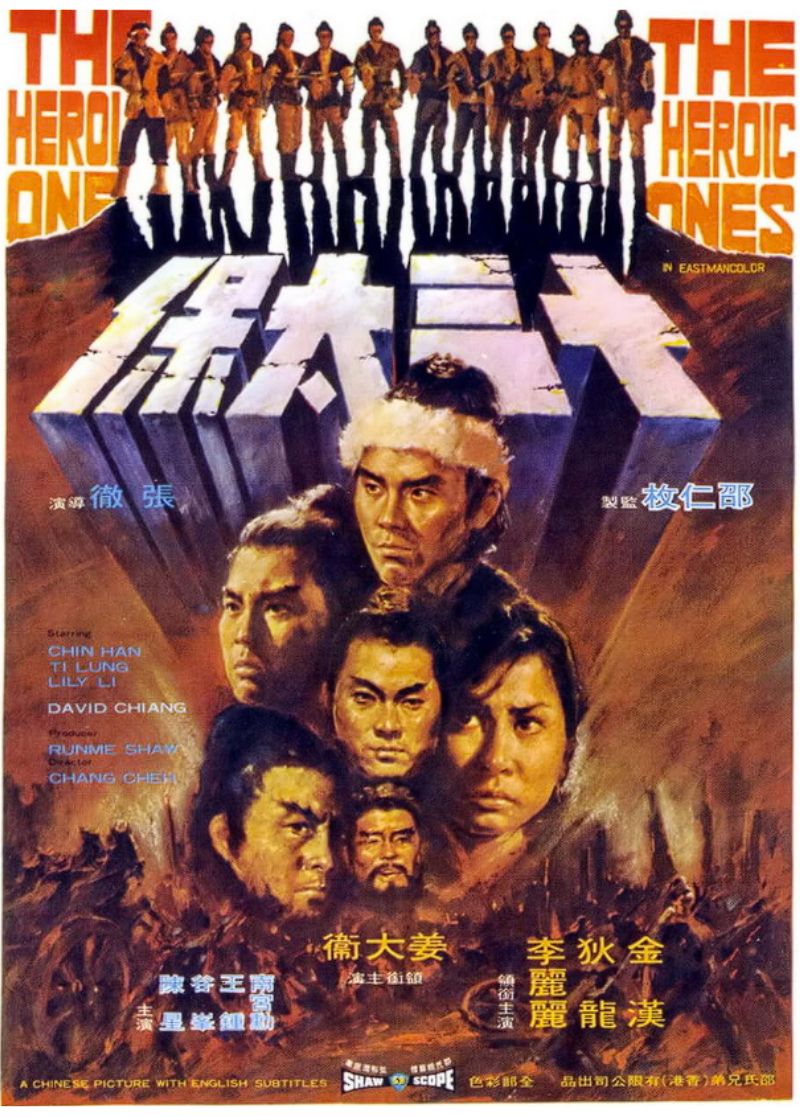 Credit to IMBD & Wikipedia for image source. Characters in image are read right to left.
The Fujien Connection
The Thirteen Taibao that we’re specifically interested in are the sons of King Guangze (廣澤尊 王 , pronounced Gwǎng-zé). King Guangze is the local deity of Quanzhou (pronounced chwant-sau) in Southern Fujian, the site of the original Southern Shaolin temple. This is where Shuang Yang originated. It's also where Master Tan’s parents were born.
King Guangze started out as a shepherd in the 900s. Once he died, he started appearing in people’s dreams, and would arrive at the perfect time to help out people in the region during disasters. He became particularly associated with helping people during plagues. As such, he came to be seen as a god. He is famed for protecting people and preventing disaster. He’s now very popular in both the Fujian region and Taiwan.
He has been given the rather impressive title of 威鎮 忠應 孚惠威武 英烈 保安 廣澤尊 王 Reverent King of Awesome Protection, Loyal Responses, Trustworthy Kindness, Awesome Prowess, Martial Energy, Protector of Peace, and Broad Compassion
He’s such an important figure that his sons have become the equivalent of saints.
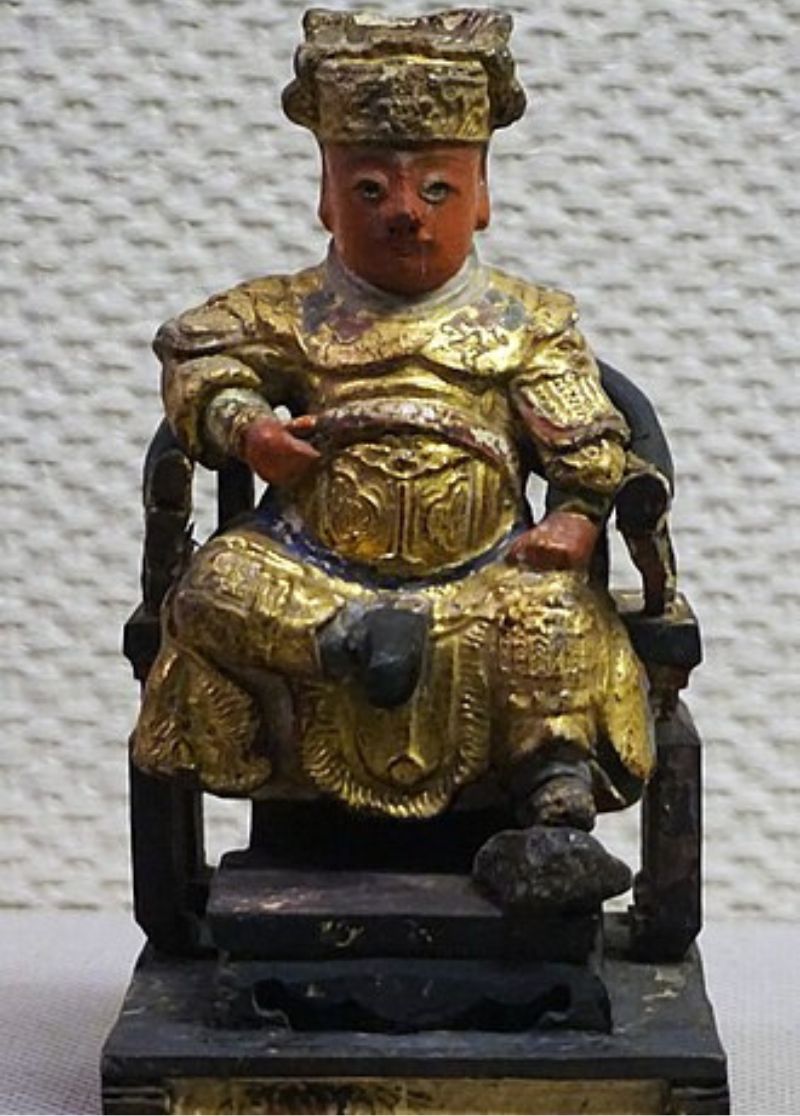 Statue of King Guangze. Credit to Wikipedia for image source.
The Thirteen Sons
These Thirteen Taibao all have specific duties and are assigned specific temples (宮).
However, the sons weren't born during the life of Guangze.
It is said that the bed in the ancestral temple had to be made every morning, and that sometimes people heard the cries of a newborn from the bedroom. The next morning a lump of plaster would be found in the temple, and this would form an image of the newborn prince. In this way thirteen princes were formed, and were distributed to thirteen temples around the Shishan area.
It is also said that if they were offended, they could come to life to strike those who offended them. People go to these sons and pray to them.
There are some people who do a thirteen temples pilgrimage, which is a shisan hangci (十三 行 祠).
Below is a breakdown of all the sons. The Chinese characters have been split up to correspond to their English translation for ease of further research, although they would be written without spaces normally. This has happened throughout this blog. Very little is available in English so you will need these characters to find anything.
Not included to avoid mistranslations is their God Name, but they all take the format of Something-Protector (something - 保).
Where no reliable information can be found, slashes have been added to avoid spreading misinformation.
The First Son
Name: Jade Emperor
Responsibility: To work with King Guagnze directly
Temple: Longshan Palace in Shishan Mountain
The Second Son
Name: King Jinque Shuntian
Responsibility: Events of Earth and Heaven
Temple: The ancestral tomb of the Holy King and the Weizhen Temple in Qingxi
The Third Son
Position: Commander of the Wuchang Army
Responsibility: Exorcising evil spirits
Temple: The giant gate of Aofeng temple (鰲峯 宮)
The Fourth Son
Position: Commander-in-Chief of the North-South Patrol
Responsibility: Ensuring good liaison in important matters
Temple: Xitou Temple (溪頭 宮)
The Fifth Son
Name: ///
Responsibility: Medicine
Temple: Jingu Temple/Shrine (金谷鎮)
The Sixth Son
Name: Shuangzhong Zunwang
Responsibility: Justice among humans
Temple: Dayanshou Mountain Temple (大延壽 山 宮)
The Seventh Son
Position: King of the East
Responsibility: Justice among humans (similar to sixth)
Temple: Aotou Temple (澳頭 宮)
The Eighth Son
Name: King Wu Yan
Responsibility: Supervising the Thirteen Taibao
Temple: Xidong Temple (溪東 宮)
The Ninth Son
Name: Marshal Wuchangjun
Responsibility: Protect the family, borders, and commander’s seal
Temple: Shan Dou Temple (山兜 宮)
The Tenth Son
Name: Chasun Tianxia
Responsibility: Patrolling the world for the Emperor
Temple: Kengbian Temple (坑柄 宮)
The Eleventh Son
Name: Jinfeng Xiushi
Responsibility: Writing
Temple: Luopu Dragon Palace (羅埔 駐龍 宮)
The Twelfth Son
Name: King Tongyue
Responsibility: Patrolling the world
Temple: The Ancestral Temple, Shishan Fengshan Temple (詩山鳳山寺)
The Thirteenth Son
Name: Dai Tian Zong Da
Responsibility: Messenger to Heaven
Temple: Fairyland Yong’An Temple (仙境 永安 宮)
So who are the Thirteen Protectors, in short? They’re the sons of the local god of the Fujian province, where our art comes from.
Some Reflections
What I particularly love about this is how specific it is to our art’s home region. Sum Chien (San Zhan / Three Wars) is a universal concept of mastering yourself. White Crane Spreads Its Wings or Twin Butterflies in Flight appear to reflect the movements of the routine. But The Thirteen Protectors contains such specific ideas about the place our art comes from. It draws you in and makes you consider the people who made the routine.
The routine is one of the most traditional ones we practice. The original White Crane style (Eng Chun/Yong Chun) has a Charp Tsar Tai Por routine and it is very similar to ours. It is still practised in Yong Chun city. I like that it hearkens back through the ages in both form and idea. It's always been a personal favourite of mine, and this makes me appreciate it even more.
Next time you do the Charp Tsar Tai Por routine, perhaps think of them as you perform it, calling on King Guangze and the Thirteen Protectors for strength and prosperity in your life and art!
Sources:
(Information on this subject is scarce and usually in Chinese. I am not a native speaker but have interpreted the material in light of my widespread experience with languages living and dead and my knowledge of Fujien kung fu. All sources used have been scrutinised and checked to the best of my ability.)
Chinese Wikipedia (various)
Wiktionary (various)
Flickr and Facebook posts by people visiting these temples
Sacred Ties Across the Seas - Chia Men Tat Jack
Taoist Ritual and Popular Cults of Southeast China - Kenneth Dean
Discussions with Master Iain Armstrong
 Talk with Prisca
