"It is better to conquer yourself than to win a thousand battles. Then the victory is yours. It cannot be taken from you, not by angels or by demons, heaven or hell"
~ Buddha

28th November 2025
Mastering Yourself: Mind, Body and Energy
The ultimate aim in Kung Fu is not to defeat others but to master oneself. This journey is about more than just learning techniques—it’s about becoming the best version of yourself. To truly understand Kung Fu, we break it into three key areas: mastering the body, mastering the mind, and mastering your energy (qi). Let’s explore each of these, one by one.
Mastering The Body
The first step in Kung Fu is to develop the body. This part is straightforward: stretch, strengthen, and stabilize. You focus on building a solid foundation with things like balance, posture, and flexibility. The body must be in tune, relaxed, and fluid. But developing the body doesn’t stop with exercises; it’s also about understanding how to move with grace and control.
The key to this physical mastery is relaxation. If you’re tense, you’re holding back your potential. To achieve the fluidity you need in Kung Fu, you must learn to let go of unnecessary tension. By relaxing, you make room for the body to move freely. And that’s when the magic happens.
Mastering The Mind
Next comes the mind. The mind is tricky; it can either be your greatest ally or your worst enemy. Discipline is required here. Meditation and mindfulness are the tools we use to cultivate mental clarity.
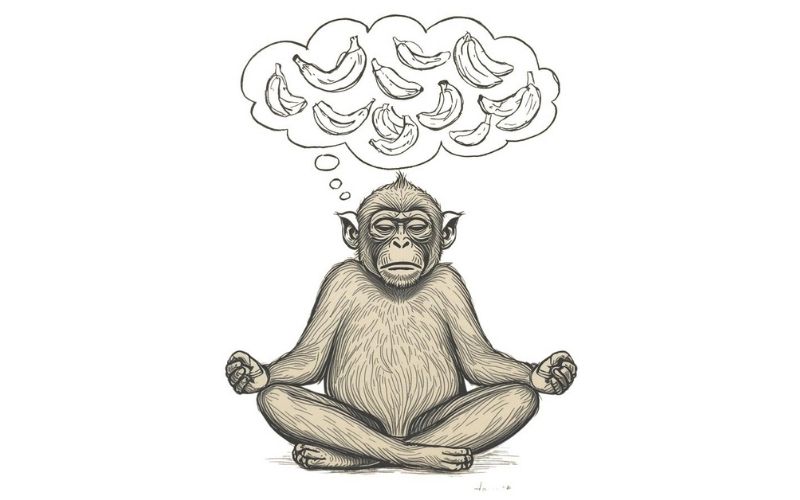
Our minds are often filled with noise—the constant chatter of the "monkey mind." It jumps from thought to thought, pulling us in all directions. But the ideal mind is completely calm. When you train the mind to be still, you’ll begin to notice when it starts to wander. The goal is to stay present, focused, and clear—without letting negativity or distraction take hold.
The mind can be a sabotaging force. Negative thoughts, overthinking, and self-criticism can cloud your judgment and disrupt your practice. The trick is to learn to let go. Don’t cling to your mistakes or your shortcomings. If you make a mistake, simply let it go. It’s in the past now. Don’t waste energy fighting yourself.
The more you practice, the more you train your mind to stay focused. You start recognizing when your mind is wandering or when you’re losing concentration. The feedback is there; you can see where you are and where you need to improve.
Mastering Your Energy (Qi )
Finally, we move to qi — your energy. In Kung Fu, it’s not just about physical movement; it’s about energy flow. Your breath is your qi, and when you are in tune with your breath, your energy moves smoothly. If your breath is shallow or forced, your energy becomes blocked, and your movements will feel stiff and unnatural.
When your qi flows freely, there’s a harmonious balance between body and mind. Yin and yang — the balance of opposites — should be present in all aspects of your being. The energy needs to flow effortlessly, without obstruction, and in harmony with the body and mind.
To develop this, you must focus on your breath, learning to breathe deeply and steadily. And just like with the body and mind, it takes practice to truly master your energy. But when you do, the results speak for themselves: a sense of calm, strength, and fluidity in everything you do.
The Journey, Not The Destination
Here’s the catch: this path isn’t about arriving at some final destination. It’s a lifelong journey. There’s no moment when you can say, “I’m perfect now, I’ve mastered everything.” The goal is to keep improving. If you stop practicing, you stop growing.
In the beginning, you might not feel as relaxed or as fluid as you’d like. It can be frustrating when you realize that you’re not as “perfect” as you want to be. But don’t let that discourage you. At least you know where you stand. And that’s the starting point.
The beauty of Kung Fu is that it gives you a framework for improvement. Every time you practice, you gain feedback. You can see how much smoother your movements are, how much more in control your mind is, how much more in tune you are with your breath. This feedback is vital, and it helps you track your progress.
But don’t expect immediate perfection. This is a lifelong practice. You never "arrive." If you did, it would mean you stopped growing. And that’s not what Kung Fu is about.
The Mind: Letting Go Of Overthinking
The mind can often be the greatest obstacle in your practice. When you’re starting out, it’s easy to overthink everything. You focus too much on each movement, trying to perfect it with your conscious mind. But this is exactly where things go wrong. In Kung Fu—and in life—the more you think about it, the worse it goes.
Think about driving. When you first learned, you overthought every move: how to hold the wheel, when to shift gears. But after a while, it became natural. The same principle applies in Kung Fu. The more you relax and let your body and mind move without conscious effort, the better it will flow.
Overthinking tightens the mind. But when you relax and just let things happen, everything starts to fall into place. It’s not about controlling each moment—it’s about allowing things to unfold naturally.
Don't Beat Yourself Up
It’s easy to get frustrated when you don’t see immediate progress. But here’s a crucial lesson: don’t beat yourself up. Perfection isn’t the goal. Mistakes are part of the process. Accept them, let them go, and keep moving forward.
If you make a mistake, don’t let the negative thoughts take over. Don’t say, “I’m terrible, I can’t do this.” Instead, simply acknowledge the mistake and move on. That’s the true path of Kung Fu — accepting yourself, flaws and all, and learning from every experience.
Keep Going
The most important thing to remember is this: practice. Keep practicing, keep improving. Whether you’re working on your body, your mind, or your energy, every step you take is progress. The journey doesn’t have a final destination — but it’s always moving you forward.
So, start where you are. Be kind to yourself. Let go of perfectionism. Accept your imperfections. With every day of practice, you’ll get better — and that’s enough.
That’s the way of Kung Fu.
Cheers to the journey!