"It is better to conquer yourself than to win a thousand battles. Then the victory is yours. It cannot be taken from you, not by angels or by demons, heaven or hell"
~ Buddha

14th August 2024
Different types of Qigong and the Balance between them
At a time when Qigong (Chi Kung) is rapidly gaining popularity globally but is still very poorly understood, there are a lot of misconceptions associated with it. I hope to be able to put straight a few of these in this article.
Qigong is based in traditional Chinese science and traditional Chinese science advocates balance. Typically this means searching for the ‘middle way’. Yin and Yang represent two extremes but mid way between them lies a point of balance, of harmony. This is where we generally seek to position ourselves. From here we can easily fine tune by moving a little in one direction or the other. Unlike much Western thinking, Chinese thinking does not advocate going to extremes or ignoring one side of things in favour of another.
Qigong has different aspects as follows:
Hard and Soft Qigong
A classic example of Yin and Yang. What does hard Qigong look like? Think of all of the demonstrations by young Shaolin monks in China where that have they have wood broken over their bodies - that is hard Qigong. Soft Qigong is perhaps more familiar now - think of old Chinese people practising in the parks in the morning.
Chi flows only through relaxed bodies. Hard Qigong functions by stopping the flow by hardening the body then releasing so that the chi which has been held back surges through and opens the channels. This is generally done in synch with the breath.
Static and Moving Qigong
Often called Neigong and Weigong. Actually Neigong has an implication of ‘internal’ whereas Weigong has an implication of external. In this case, ‘internal’ often implies no external movement - chi is being is being guided or manipulated internally - whereas ‘external’ involves external movement in co-ordination with the movement of chi - perhaps our usual image of Qigong.
Martial and Non-martial Qigong
Qigong has traditionally been practised by Chinese martial artists to enhance their physical abilities, facilitate their training and speed recovery. A classic example of this is Iron Shirt Qigong which strengthens the body way beyond normal human limitations. Bot the Buddhist Shaolin and Taoist Wudang branches of Kung Fu practise Qigong as an integral part of their training and the Qigong that they practise is some of the most powerful. This is martial Qigong.
Qigong is also practised by spiritual groups, academics - such as doctors and people just looking for healthy exercise. These will often practise non martial Qigong - i.e. qigong with no martial relevance or martial component.
Buddhist Qigong and Taoist Qigong
Although not mutually exclusive these two philosophical traditions tend to have their own schools of Qigong. Buddhist Qigong is typically derived from the Shaolin tradition and therefore has martial Qigong as it’s root. Taoist Qigong has many different traditions and is very varied. Nowadays there are forms of Qigong which associate themselves with neither philosophy although they likely arose from either one or a mixture of both.
So how do the arts that we practise fit into this sheme of things?
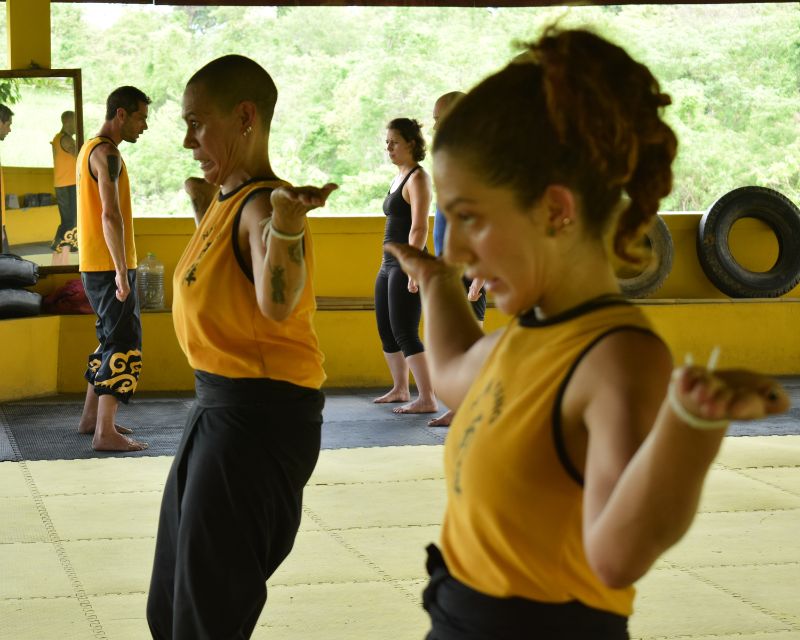
Bodhidharma’s Vein-Tendon Qigong
This involves a cycle of tensing and releasing, very ‘yin-yang’ but since it involves tension it is very definitely considered Hard Qigong. The first 4 exercises are static and they exemplify very well the idea of Static Qigong there is a great deal of movement internally but minimal movement externally. The last exercise is moving. It is derived from the Buddhist Shaolin root, hence it is named after Bodhidharma - the Shaolin founder. Is it martial? Well, there are no fighting applications so we would likely say no although it is the sort of Qigong performed by martial artists to toughen their bodies and enhance their chi flow.
So we might say that this is hard, static, non-martial Buddhist Qigong.
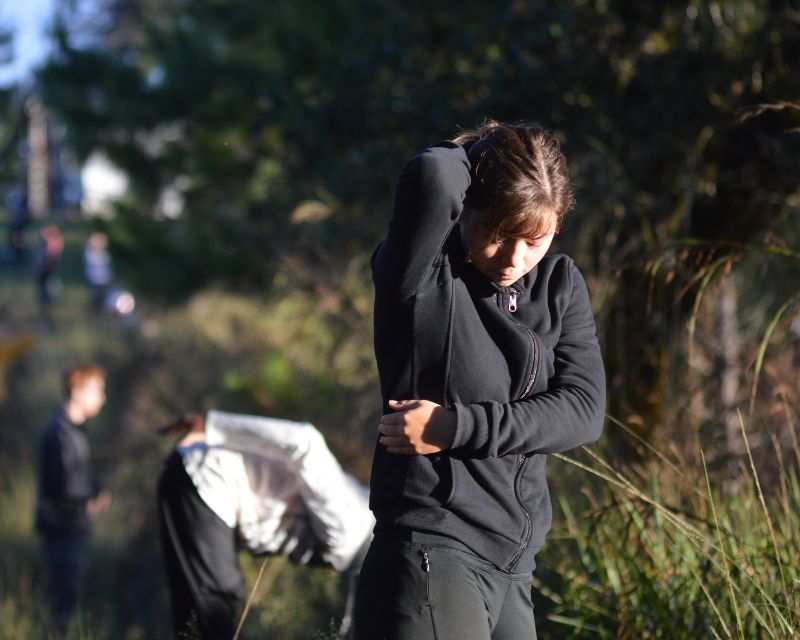
Tong Ling Qigong
This is clearly Soft Qigong as there is no tension exerted at any point in the routine. The first exercise is static Neigong. The other 10 are moving Weigong. Although this routine is very popular with martial artists it has no martial application or content - it is Non Martial Qigong. It is not routed in either Buddhism or Taoism although it is more reminiscent of Taoist Qigong than Buddhist.
So we might say that this is soft, moving, non-martial Qigong.
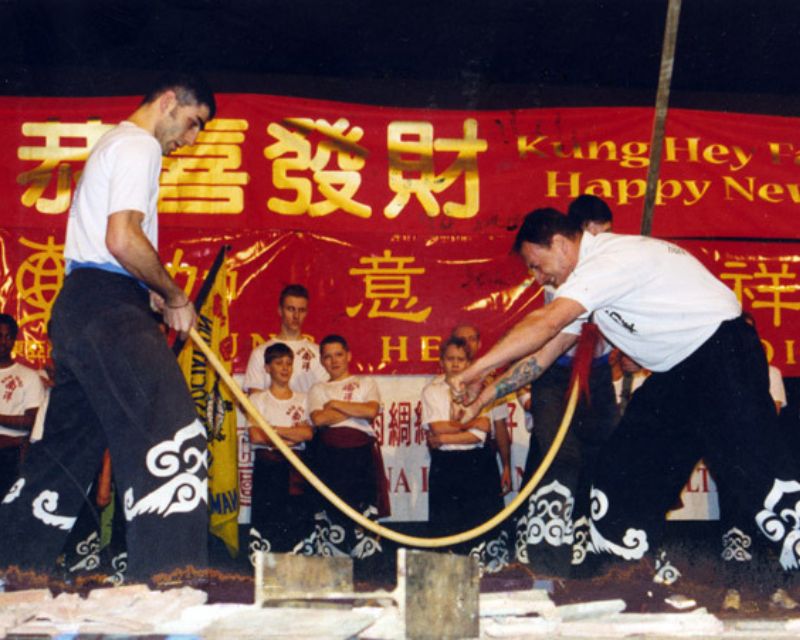
Shaolin Iron Shirt Qigong
It is quite subjective whether to consider this hard or soft Qigong as it has elements of both but since it is perhaps harder than what usually springs to mind when we think of Qigong then I am going to call it hard. It is definitely Moving Qigong. Again, it has no direct martial applications although the whole intention is to make the body more resilient for the purpose of practising martial arts. Borderline but I will go for non-martial. It is most definitely Buddhist Shaolin Qigong.
So we might say that this is hard, moving, non martial, Buddhist Qigong.
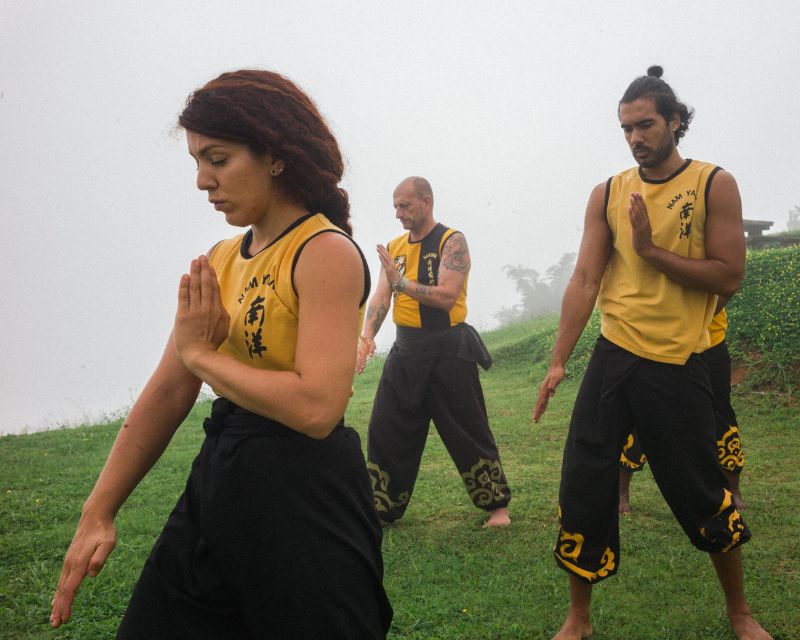
Shuan Yang Pei Ho Rou Rouan Chien
Clearly soft! ‘Rou Rouan’ means ‘soft and gentle’! Clearly moving - it is a continuous flowof movement through 66 postures. It is definitely a martial art. The word ‘Chien’ means fist - implying art of the fist or martial art. And it is most definitely from the Buddhist Shaolin Monastery in Quan Zhou, Fukien.
So we might say that this is soft, moving, martial Buddhist Qigong.
Sum Chien (San Zhan)
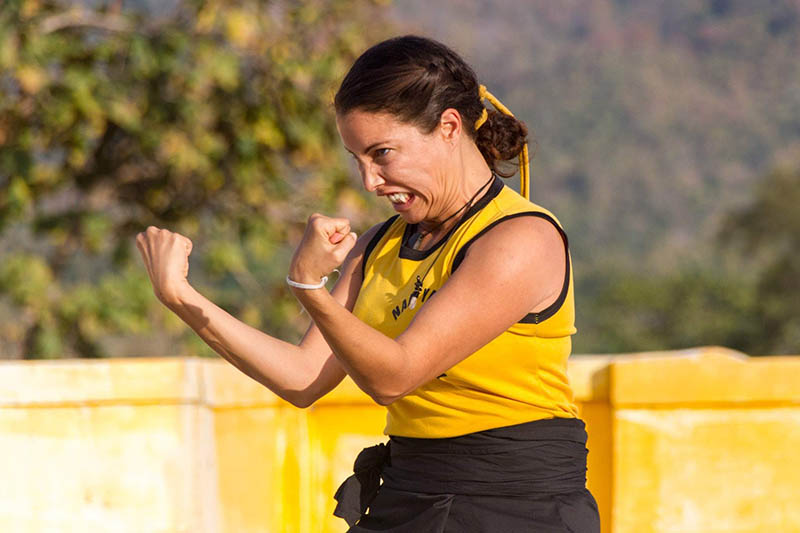
This routine features powerful, explosive movement and dynamic tension so it epitomises Hard Qigong. Clearly it involves a lot of movement. It is the basic training exercise of the Tiger - Crane Kung Fu style and involves some martial movement so it is ‘martial’. And it really characterises the Southern Shaolin branch of Kung Fu so it is definitely Shaolin Buddhist.
So we might say that this is hard, moving, martial Buddhist Qigong.
Summary:
Having spent about 37 years traveling around South East Asia and China learnig from the Chinese I am well aware that Qigong is a huge field of study and that no one can ever know more that a small part of it. Unfortunately I encounter growing numbers of people who have watched some videos on YouTube and think that they are an expert and then simply go into denial when faced with any Qigong outside their narrow range of experience and say ‘this isn’t Qigong’. No real Master claims to know it all!
Within Nam Yang we practise a good ballance of different Qigongs. We have a very good balance of hard and soft, we have static as well as moving and we have both martial and non-martial. We are biased towards Buddhist Qigong as we are a Shaolin school but we do have Tong Ling Qigong - a non Buddhist style. We don’t claim to know it all but we do follow the middle way and we do seek to find balance.
Bottom Line
Finally: what counts is doing it! No matter how much we know, it is worthless if we do not practise it. Learning these arts and then not practising them regularly is like buying gym membership then never going to the gym!
So what does this actually look like?
Tong Ling: soft, moving, non-martial Qigong.
Shaolin Iron Shirt: hard, moving, non-martial, Buddhist Qigong.
Shuang Yang Pei Ho Rou Rouan Chien: soft, moving, martial Buddhist Qigong.
Sum Chien (San Zhan): hard, moving, martial Buddhist Qigong.
 Talk with Prisca